Press enter or spacebar to select a desired language.

History & Anthropology

How to Use the Subject Guide

Welcome to the History & Anthropology Subject Guide!  Here, you can:

  1. Use the Resources tab to find helpful databases and websites.
  2. Use the Research Tips tab to get useful tips and tricks to make your research easier, and better.
  3. Use the Citations tab for an introduction to citation in whichever style you need, and find some helpful links to online writing labs.
  4. If all else fails, use the Need More Help? tab to sit down with one of your CMC librarians.

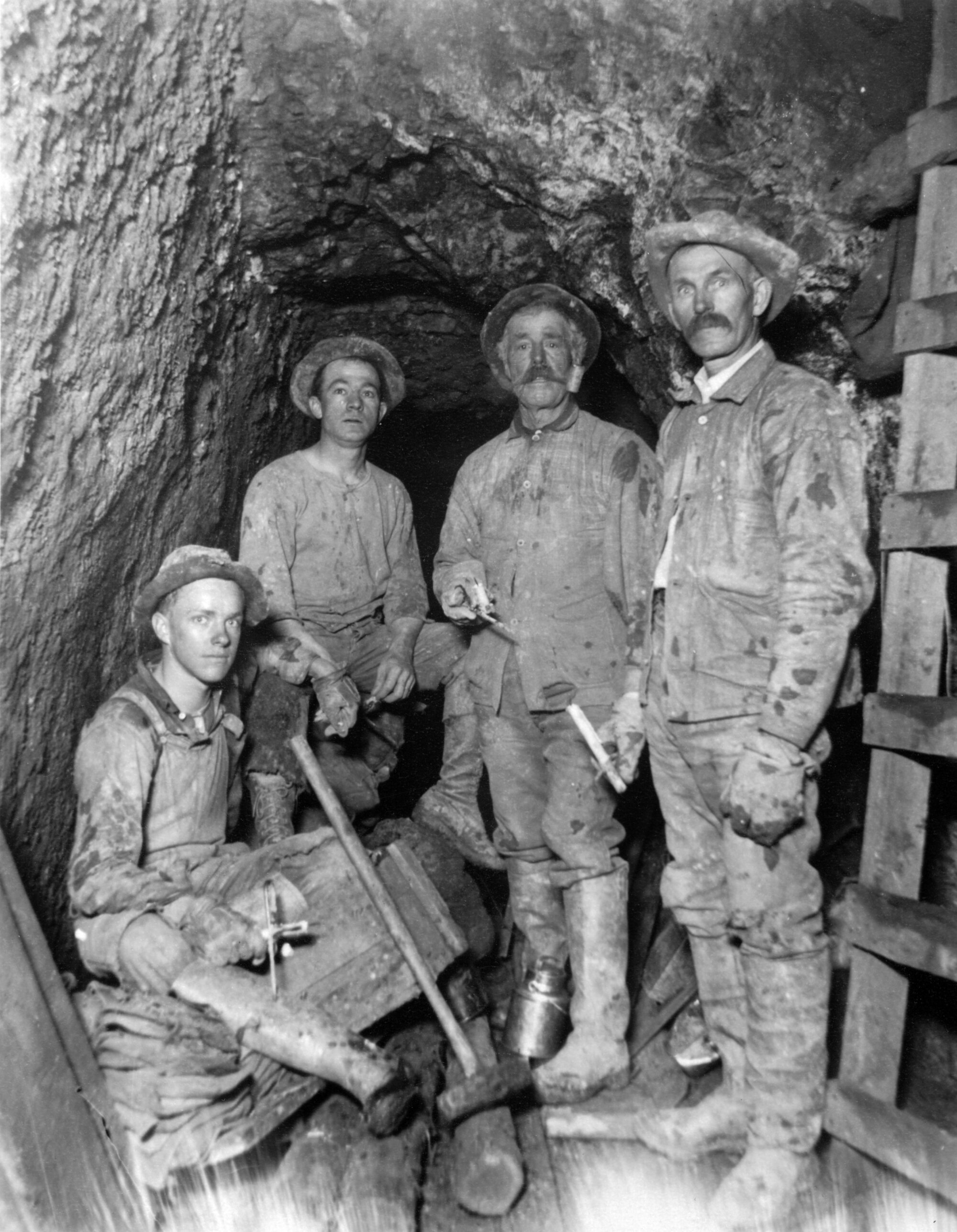
Four men stand in a mining tunnel, looking at the camera. They wear work clothes and hold mining tools such as a hand-drill and sledge hammer.

Miners pose with a sledgehammer and miner's candies in a mine tunnel in Summit County, Colorado. 

(Image Source: Denver Public Library Western History Collection)

History & Anthropology Databases

  •  
    Provides complete coverage of multidisciplinary academic journals. It supports high-level research in the key areas of academic study by providing peer-reviewed journals, full-text periodicals, reports, books, and more. More than 9,000 full-text journals, for more than 7,800 peer-reviewed journals, dating back as far as 1887
     
  •  
    Provides thousands of biographies. In addition to keyword search, users can locate biographies by subject occupation, activity, nationality, gender, birthplace and more
     
  •  
    A reliable compendium of information on life in Colorado
     
  •  
    Contains complete encyclopedia with related Internet resources, Merriam-Webster's Collegiate Dictionary, and Thesaurus
     
  •  
    Covers the culture, traditions, social treatment and lived experiences of different ethnic groups in America. It provides full text from a growing list of sources including peer-reviewed journals, magazines, e-books, biographies, and primary source documents
     
  •  
    Ties together sources to present a rich analysis of issues: social, political, military, economic, environmental, science related, health related, cultural, and headlines in world hot spots
     
  •  
    Includes full text for 150 leading history periodicals and features more than 1,990 reference books, encyclopedias, and non-fiction books
     
  •  
    Over 300 titles cover humanities, literature, language, art history, education, business, and law disciplines. Dates of coverage vary by journal title. All go back to the very first issue published, but most have a "moving wall" embargo that excludes issues from the most recent 3-5 years
     
  •  
    Includes hundreds of journals and magazines covering many religious and philosophical topics, including world religions, religious history, political philosophy, and philosophy of language
     
  •  
    Find comprehensive coverage of the most-studied topics, from the arrival of Vikings in North America 1,000 years ago to Vietnam, Watergate and the wars in Afghanistan and Iraq
     
  •  
    Reaches back to the ancient world and forward to today’s headlines. Provides an overview of world history that covers the most-studied events, periods, cultures, civilizations, religions, conflicts, wars, ideologies, cultural movements, and people

 
  •  
    Illuminates the histories and contemporary cultures of the Native peoples of North America
     
  •  
    Provides thousands of biographies. In addition to keyword search, users can locate biographies by subject occupation, activity, nationality, gender, birthplace and more
     
  •  
    Highlights the experience and impact of African Americans as recorded by the news media, 1704 to today. Black Life in America offers coverage of the African American experience from the early 18th century to the present day, sourced from more than 19,000 American and global news sources, including over 400 current and historical Black publications
     
  •  
    Includes more than 600,000 digitized pages, representing 160+ individual newspaper titles published in Colorado from 1859 to 1923. Due to copyright restrictions, CHNC does not generally include newspapers published after 1923
     
  •  
    Contains a selection of photographs, maps, broadsides, architectural drawings and other documents from the collections of the Western History/Genealogy Department chronicling the people, places, and events that shaped the settlement and growth of the Western United States
 
  •  
    Provides open access to photographs, books, maps, news footage, oral histories, personal letters, museum objects, artwork, government documents, and so much more. The cultural institutions participating in DPLA represent the richness and diversity of America itself, from the smallest local history museum to our nation’s largest cultural institution
     
  •  
    The U.S. Government Publishing Office is responsible for the production and distribution of information for all three branches of the Federal Government, including the official publications of Congress, the White House, and other Federal agencies in digital and print formats
     
  •  
    Focuses on the experience and impact of Hispanic Americans as recorded by the news media, covering the early 18th century to the present day, sourced from more than 17,000 publications, including 700 Spanish-language newspapers and periodicals
     
  •  
    Provides open access to written and spoken words, sound recordings, still and moving images, prints, maps, and sheet music
     
  •  
    One of the largest, most internationally diverse genealogy databases. It provides access to billions of historical documents, millions of historical photos and other resources in thousands of databases that span the past five centuries
     
  •  
    Offers access to current and archived content from more than 2,000 newspaper titles, as well as newswires, transcripts, business journals, periodicals, government documents, and other publications
     
  •  
    Allows you to use data to create maps of the socio-economic conditions across the U.S.
     
  •  
    Features a wide range of images from some of the world’s leading museums, photo archives, scholars, and artists
     
  •  
    Offers nearly 3 million images rights-cleared for non-commercial, educational use and are perfect for creating exciting and visually engaging projects and presentations
     
  •  
    Provides access to over 35,000 educational videos covering a wide variety of disciplines


Useful Websites

  • The American Presidency Project

    Contains thousands of presidential documents, including presidential papers, party platforms, candidates' remarks, Statements of Administration Policy, documents released by the Office of the Press Secretary, and election debates


  • Civil Rights Digital Library

    Provides access to a wealth of resources related to the civil rights movement, including photos, documents, videos, and oral histories


  • History Colorado

    A rich collection of materials related to Colorado's history, including books, photos, documents, oral histories, ephemera, and artifacts


  • World History Encyclopedia 

    Free online history encyclopedia with fact-checked articles, images, videos, maps, timelines, and more

Background Reading & Exploratory Research

Before you write your thesis statement or research question, do a little exploratory research.  This is just means finding some trustworthy, but less academic, information on the topic.  Think of it as formal curiosity: just learning about the general topic.  This information can take the form of encyclopedia articles; articles or videos from trustworthy, but less academic sources; or books.  By doing this exploratory research, you'll give yourself a basic understanding of the topic that will:

  • Allow you to write a more informed (and less likely to be proven incorrect) thesis statement or research question.
  • Make it easier to find more academic sources when you get to that stage of the research process, because you'll already know some of the vocabulary and keywords that you'll need.

Where to find background information on your topic:

  • Books!
  • The web!  Be sure to evaluate any sources you find with lateral reading and the SIFT method.
  • Encyclopedias and other reference works!  This could be Encyclopedia Britannica, Wikipedia, research starters on Ebsco databases, or reference entries in Gale databases.

Search Engines vs. Library Databases

What is the difference between library databases and search engines?

Great question! Search engines crawl the entire web. Most are commercial businesses that make money from ads placed above the search results, from user clicks, and from the data they collect on users. Search engines like Google and Bing only index a fraction of the content on the web — the rest, known as the "invisible web" or "deep web," is beyond their reach. Since so many books, journals, magazines, and newspapers are now published online, a search engine can pull up material that may be useful for your coursework. However, publishers still need to make money, so the books or articles you find through a search engine may not be free.

Library databases, on the other hand, are built specifically for college-level research. They search focused collections of journals, magazines, newspapers, ebooks, and more, often organized around a particular subject area. This is content that search engines simply can't index or access.

Which should I use?

It depends on the context!  Are you looking for some basic background information on a topic?  Or maybe some information from a specific government or organization?  Or just some general information like menus or hours for a local restaurant?  Then a search engine might be right for this particular search.  If you need more in-depth information, or more trustworthy information on a specific topic, library databases are the way to go.

Keyword Searching

When using library databases, don’t just type your full research question or thesis statement into the search bar.  You need to use an approach called keyword searching.  Here’s how, with an example:

  1. Identify the main ideas of your topic. For example, if your topic is "How does social media use affect grades in college students?" Your main ideas would be "social media" "grades," and "college."
  2. For any ideas that are more than a single word, like social media, put them in quotation marks for better results.
  3. Put an upper case AND between each of your keywords.  So, your search would look like this:

"social media" AND grades AND college

  1. If you find too many results, try adding a keyword, or try making one of your keywords more specific, so your search might look like:

"social media" AND grades AND college AND "first year"

or

"social media" AND grades AND "community college"

  1. If you find too few results, either reduce the number of keywords, or try adding synonyms of your keywords.  If you add synonyms, put all of the synonyms for each keyword in parentheses, and put an uppercase OR between them.  With synonyms, your search might look like this:

("social media" OR tiktok OR instagram) AND grades AND college

Some general tips for keyword searching:

  • Try to think up synonyms before your initial search.  You can start out using them, add them later, or sometimes it just helps you think of a better keyword for one of your ideas.
  • Search engines like Google and DuckDuckGo use a different method called natural language searching.  This means you can type your full question into the search without any problems.  But it can still be useful to just type the keywords into a search engine, without the ANDs or ORs.  Searching this way helps to avoid confirmation bias (phrasing your search so you mostly get results that agree with what you already think).
  • In general, AND reduces the number of results you'll get, and OR increases the number.
  • If you get completely overwhelmed with the ANDs and ORs and parentheses and quotation marks, some of our databases have natural language searching, it just has to be toggled on to use.  Look for a toggle that says "natural language search," or "AI-assisted search."

Evaluating Sources

When evaluating information, we recommend using the SIFT method. SIFT stands for:

Before you read, watch, or share the article or video, or even before you get all worked up about the headline, stop and ask yourself a few questions:

  • Am I familear with the source or website where I'm finding this information?
  • If so, what is the website or source's reputation?

If the answer to the first question is "no," or if the website or source isn't authoritative or trustworthy, continue to the next step, "Invesitgate the source."

Make sure you know what you're looking at before you read or watch it by using a technique called lateral reading.

Try to find other sources that have covered the same topic. Has anyone else covered it? If so, how does the coverage compare? Do the other sources corroborate the information from the first? Do they dispute it? When possible, try to find coverage from trusted news sources.

You can also see if professional fact checkers have already investigated the claim. Try using one of the following sites to see if the claims in your sources are overly biased or supported by evidence.

Articles often reference quotes from experts, or mention the results of studies. If you can, it's a good idea to try to locate the original source of the information. Click through links, if available, to get to the original sources. If a bibliography is present, look up the sources listed there.

Citations: The Basics

What is a citation?

A citation is just a way to let your audience know where you got your information from.  Generally, it consists of two parts, a quick, in-text citation or footnote, and a list at the end of your paper with more information on the sources.  

Why cite?

There are several reasons to include citations in your work:

  • To give credit to original researchers and thinkers.  Just as you're putting a lot of effort into your paper or presentation, so too did the authors of the article you used.  
  • To lend authority to your voice, by demonstrating that you got your information from experts.
  • To leave a trail for others.  If someone wants to explore the conversation, or use the same sources in their own work, citations help them find the information they need.
  • To show where your work fits in the context of the larger conversation.    

When should you cite?

Many people think you only have to cite if you directly quote a source, but that's not true.  You should cite when you quote, sure, but also when you summarize or paraphrase the information from a source.  However you present the information, you need to let your audience know where it came from.

APA Citations

The following guides can help you with your APA citations:

MLA Citations

The following guides can help you with your MLA citations:

Chicago Style Citations

The following guides can help with Chicago citations:

Work with CMC Librarians

Still having trouble with your research?  CMC librarians are always happy to help with research and citation questions!  You can schedule an appointment, email us at CMClibraries@coloradomtn.edu, or pop in to any of our physical locations.  You can also check our staff directory if you'd like to reach out to a specific librarian.

24/7 Library Chat

Do you need research help right this second?  Is your paper due in two hours, and your citations are a mess?  Try our 24/7 Library chat option!  Anytime, day or night, an academic librarian will be on the other end.  También disponible en español.